

Sleep tracking ring adoption is exploding in 2024—driven by tech enthusiasts and health-minded adults wanting fast, accurate, and discreet sleep monitoring. But do these compact wearables actually deliver? Can they match medical-grade accuracy, and what pitfalls do top reviewers routinely miss? This buyer’s guide delivers evidence-first answers backed by new 2024 market data, clinical studies, and real use cases. If you’re on the fence or debating whether a ring can really outsmart your current wearable, read on.
Key Takeaways
- Sleep tracking rings are now the fastest-growing wearable sleep tech, fueled by major 2024 launches, comfort upgrades, and advanced health sensors (source).
- Accuracy for detecting sleep is high (~96%), but most rings struggle to spot when you’re awake—and long-term user adherence is a real concern (source).
- Privacy, clarity of algorithms, and the actual value of paid subscriptions can vary wildly between brands. Ask the right questions before you buy (source).
- Quick take — should you consider a sleep tracking ring in 2024?
- Why rings are the fastest-growing wearable for sleep
- What sleep metrics do rings measure (and what they mean)
- How accurate are smart ring sleep trackers vs. medical-grade devices?
- Common user complaints and practical limitations
- Price ranges, leading brands & subscription models (2024 snapshot)
- Privacy, data security and algorithm transparency
- Clinical evidence — can rings actually improve sleep or health outcomes?
- Three key topics most top-ranking competitor articles miss
- How to choose the right sleep tracking ring — 8-point checklist
- Quick comparison — handful of 2024 models worth considering
- Final verdict and next steps
- FAQ
Quick take — should you consider a sleep tracking ring in 2024?
If you want sleep tracking that’s more discreet and often more accurate than a wristband, a sleep tracking ring deserves a closer look. Market momentum is huge: The global smart-ring market was valued at about $319 million in 2024 and is projected to reach $2.4 billion by 2032—a staggering growth curve. Major launches like Samsung’s Galaxy Ring, Ultrahuman Ring Air, and Noise’s Luna Ring have supercharged visibility. In 2024, sleep monitoring made up an estimated 35% of all smart ring revenue, confirming that these devices are no passing fad.
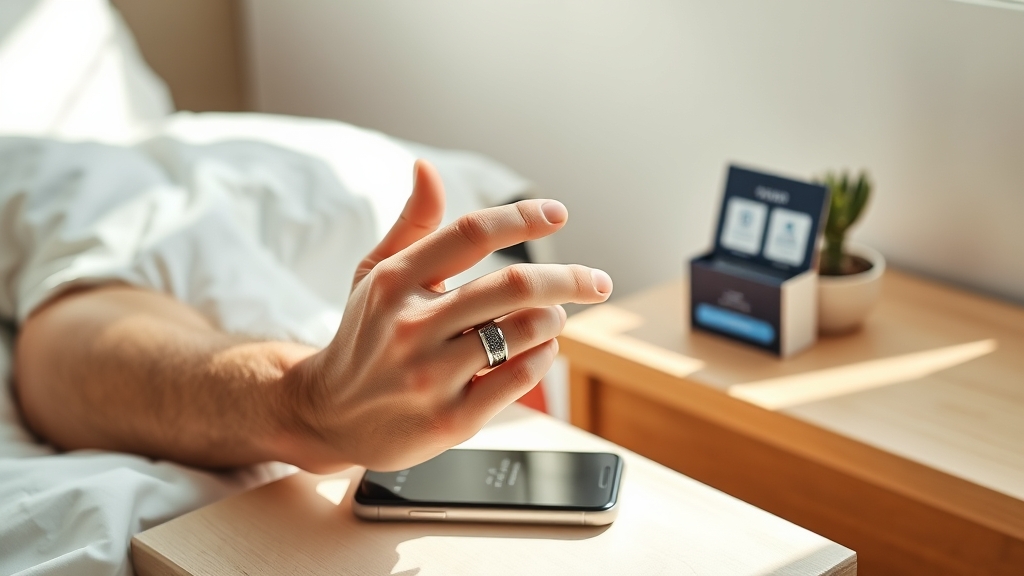
Pros: They’re screen-free, nearly weightless, and worn on the finger—a spot ideal for accurate heart signals and sleep data. The data syncs seamlessly with your phone, and you’ll never risk being woken by a notification buzz.
Cons: You’ll need to charge them about once a week, not all sleep tracking rings are comfortable for every hand, and “deep-dive” analytics may require a subscription. The most benefits? Typically, tech-forward adults who value tracking trends over time—especially if you dislike bulky wearables at night.
For others—especially people with severe insomnia, sleep apnea, or sensitivity to devices on their hands—a wrist tracker or no wearable may still be better.
Why rings are the fastest-growing wearable for sleep
The smart ring sleep tracker market is outpacing almost every other wearable segment in 2024. Key reasons:
- Discreet form factor: Finger placement gives access to smaller blood vessels, enabling more accurate heart rate (HR) and oxygen (SpO₂) readings than most wristbands (source).
- Mature sensor technology: Today’s smart ring sleep trackers use advanced photoplethysmography (PPG), temperature sensors, and accelerometers for reliable data capture.
- Big 2024 launches: Samsung’s Galaxy Ring (July 2024), Ultrahuman Ring Air, and India’s Noise Luna Ring all hit the market, showing global demand, with several million active users across Oura and other brands (source).
- Dedicated sleep features: Sleep monitoring alone captured 35.07% revenue share in 2024 (source).
The result: smart ring sleep trackers are favored by early adopters wanting a screenless, minimalist approach to health tracking that fits any lifestyle.
What sleep metrics do rings measure (and what they mean)
Today’s sleep tracking rings can measure far more than just “how long you slept.” Typical sensors and metrics include:
- Total sleep time
- Sleep-stage distribution (light, deep, REM)
- Sleep efficiency (percent of time in bed actually asleep)
- Heart rate (HR) and heart rate variability (HRV)
- Peripheral oxygen saturation (SpO₂)
- Skin temperature
- Readiness or “recovery” scores, summarizing restorative quality of sleep
Why finger placement matters: The finger offers superior pulse signals compared to the wrist, mapping more microvascular changes. This enables higher precision in HR, HRV, and SpO₂—variables core to tracking stress, recovery, and potential health red flags (source).
These results funnel into easy-to-read dashboards within each brand’s app—and are often compatible with third-party devices like smart home hubs, connecting your sleep routines to lights or thermostats.
How accurate are smart ring sleep trackers vs. medical-grade devices?
Here’s where things get nuanced. Studies show smart ring sleep trackers have excellent “sensitivity” (ability to detect actual sleep): most rings, such as Oura, hit about 96% sensitivity compared to gold-standard polysomnography (PSG) (source).
However, “specificity” (ability to correctly identify wakefulness) is lower—hovering around 48%. Many rings struggle to spot short awakenings or restlessness, so users with insomnia or sleep apnea may get wake periods misclassified as sleep.
Stage breakdowns are mixed: average agreement with PSG is about 65% for light sleep, 51% for deep, and 61% for REM sleep. For heart rate and HRV, rings perform extremely well: HR R² ≈ 0.996, HRV R² ≈ 0.98. Bottom line: for basic trends and recovery, you get solid fidelity, but don’t expect hospital-grade diagnosis or perfect stage readings.
Common user complaints and practical limitations
Despite industry hype, users report several recurring issues. Here’s what to really watch for:
- Comfort & fit: Rings can be tight or irritate skin. Not every hand shape fits every band, so trial periods and return policies are crucial.
- Battery life: Most sleep tracking rings last 4–7 days per charge (sometimes less if using all features). You’ll need to remember to recharge regularly.
- Wake misclassification: As above, rings can miss brief awakenings—problematic for insomnia or sleep apnea sufferers (source).
- App usability: Some apps are unintuitive or “lock” advanced data behind paid analytics subscriptions.
- Opaque algorithms: Most brands don’t fully disclose how scores are calculated. You’re trusting a black box with your health information.
- Declining adherence: Many users stop wearing rings night after night due to discomfort or forgetfulness—without consistent use, tracking loses value.
To avoid disappointment, always investigate brand-specific usage policies, warranties, and software support before buying. For more on sleep hygiene and building better habits, check out our evidence-based sleep hygiene checklist.
Price ranges, leading brands & subscription models (2024 snapshot)
The leading brands for smart ring sleep trackers in 2024 are:
- Oura—the long-standing flagship, with millions of active users worldwide
- Samsung Galaxy Ring—deep integration with Samsung Health ecosystem
- Ultrahuman Ring Air—launched June 2024, emphasizes continuous metabolic data
- Noise Luna Ring—fast-growing in Asian markets
Most rings retail at $200–$450, but pricing can swing quickly—and may not include required monthly subscriptions for “premium” analytics. Samsung’s Galaxy Ring, for example, is expected to push ecosystem features and integrations, possibly bundling data access. Always confirm current prices on the official product pages just before purchase.
Value tip: Calculate total cost of ownership over 1–2 years including subs before you commit. Consider if you’d use advanced analytics, and remember cheaper rings may lack robust validation or third-party app support.
To maximize recovery (and ring insights), many users also explore muscle recovery support with L-Carnitine
Privacy, data security and algorithm transparency
Privacy and security are top buyer concerns—especially among tech-savvy, health-conscious adults. Research shows the smart ring segment faces real scrutiny around data collection, usage, and sharing (source). Issues include:
- How long sleep or health data is kept and by whom
- Whether you can export or delete your data easily
- Whether algorithms are transparent or proprietary “black boxes”
- Third-party sharing for research, insurance, or marketing
Most brands publicize privacy policies and claim to use encryption, but specific protections vary. Before you buy, ask:
- Can I see the privacy policy before activating?
- Is my data stored locally, in the cloud, or both?
- Can I export my health records or delete my entire account?
- Does the app integrate with my existing phone privacy controls?
Want alternatives for non-digital sleepers? See our honest comparison of mouth tape for better sleep or discover sleep earbuds for noise-free nights.
Clinical evidence — can rings actually improve sleep or health outcomes?
The evidence is promising but nuanced. A 2024 systematic review (source) found smart ring sleep trackers measure heart rate and sleep patterns almost as well as hospital devices, though methodologies and results are heterogeneous.
Rings show standout potential in use cases like pregnancy monitoring. Several studies found rings helped continuously distinguish pregnancy outcomes and predict labor onset by tracking HR, temperature, and SpO₂ around the clock. In hospitals, rings are being piloted for monitoring recovery and flagging dangerous sleep events over multi-night periods.
But: no randomized controlled trial yet proves that wearing a ring, by itself, directly improves sleep in the general population. Most benefits come from feedback, self-experimentation, and behavior change over time.
If you want to optimize sleep with an evidence-backed, systematic plan, explore our chronotype sleep schedule guide.
Three key topics most top-ranking competitor articles miss
Most reviews focus on features or short-term accuracy. Here are the real-world issues buyers should never ignore:
- Long-term adherence and behavior change: Most competitors ignore whether people actually wear sleep tracking rings long enough for consistent improvement. Research shows declining adherence is common—meaning you may quit before real benefits accrue.
- Validation methodology nuance: Accuracy stats are only as useful as the methods behind them. High “sensitivity” (~96%) looks great, but low “specificity” (~48%) means lots of wakefulness may go undetected—especially if you have insomnia. Validation differs between brands and published studies (source).
- Ecosystem & clinical integration: Few discuss the rapid integration of sleep tracking rings into broader IoT, smart home, or hospital systems. These devices are now feeding continuous metrics into medical records, smart thermostats, and even remote pregnancy monitoring (source).
For a deeper look at how HRV data from wearables work, see our guide on HRV health monitoring.
How to choose the right sleep tracking ring — 8-point checklist
- Accuracy & validation: Look for devices validated against PSG, not just “proprietary” internal data
- Expected battery life: Is 4–7 days per charge realistic for your routine?
- Comfort & fit: Is the sizing kit flexible, and does the brand offer risk-free trial periods?
- Sensor set: Do you need SpO₂, skin temperature, HRV—or just basics?
- Total cost: Price + subscription over your likely usage. Don’t get surprised by “analytics” paywalls
- Privacy: Policy transparency, local storage, export options
- Compatibility: Will it sync with your apps, smartwatch, or smart home platforms?
- Do you need medical/clinical use? Check for ongoing validation if considering pregnancy, hospital, or remote care scenarios
Want to maximize your recovery environment? Consider pairing a ring with sauna blanket sessions (see proven guide).
Quick comparison — handful of 2024 models worth considering
| Model | Sensors Included | Battery Life | Subscription | Best For |
|---|---|---|---|---|
| Oura Ring Gen 3 | HR, HRV, SpO₂, Skin Temp, Sleep Stages | 4–7 days | Required for full insights | Validated accuracy, full analytics, large ecosystem |
| Samsung Galaxy Ring (2024) | HR, SpO₂, Skin Temp, Sleep Stages | 5–7 days (est.) | Likely with Samsung Health | Integration with Samsung devices, smart home sync |
| Ultrahuman Ring Air | HR, SpO₂, Skin Temp, Activity | 6 days (est.) | Optional, premium features paywalled | Focus on metabolic health, minimal design |
| Noise Luna Ring | HR, SpO₂, Skin Temp | 4–6 days | Subscription varies by region | Budget pick, large Asian market userbase |
Final verdict and next steps

A sleep tracking ring can be transformative for tech-literate, health-focused adults who want accurate, unobtrusive sleep and recovery tracking. If you’re allergic to screens at night or need more reliable HR, a ring beats a watch or band for comfort and signal quality. But shoppers with insomnia, sleep apnea, or skin sensitivities may want to wait or opt for wrist-based sensors—with the bonus of less risk of frustrating misclassification.
Never buy on hype: use the 8-point checklist above, insist on clinical validation, and always check privacy policies before setup. If you’re ready to trial a sleep tracking ring, compare the latest models, hunt down a free trial or money-back guarantee, and seek the most transparent subscription pricing. Adoption is skyrocketing—market value is set to leap from $319 million in 2024 to $2.4 billion by 2032 (source), but your comfort, data rights, and long-term adherence matter most.
Ready for better sleep tracking? Start by reviewing your top priorities, compare a few models head-to-head, and consider pairing ring data with a full evidence-backed sleep routine for the best outcomes.
FAQ
Do sleep tracking rings really work as well as advertised?
Most rings accurately track total sleep and heart rate, but are less reliable for pinpointing brief awakenings or precise sleep stages. Great for trends, not medical diagnosis.
Are smart ring sleep trackers safe to wear every night?
For the majority, yes—they use low-power sensors and hypoallergenic materials. Rarely, people with skin sensitivities may experience irritation, so check fit and return policy.
Do I need to pay a monthly fee for analytics?
Many top brands now require a subscription for detailed trend analysis and readiness scores. Always confirm the total cost before purchase to avoid surprises.
Is smart ring sleep data private?
Most brands encrypt your data, but policies vary—some share anonymized data with research partners or insurers. Always read the privacy policy in detail before setup.
What if my sleep tracking ring doesn’t fit right?
Check that the brand offers a sizing kit or trial period. Comfort issues are common—take advantage of risk-free returns if available.