

Home gym rubber flooring sets the foundation for a functional, safe, and cost-effective workout space at home—if you know exactly how to select, install, and maintain it. This guide zeroes in on what’s proven to matter in 2024: odor control, real-world durability, and controlling true lifetime cost, so you avoid expensive mistakes and enjoy every training session.
Key Takeaways
- Quality home gym rubber flooring can minimize strong odors, maximize durability, and protect your equipment and subfloor over years of use—if you choose the right product and install it correctly.
- Average rubber flooring material costs run $2–$5 per square foot, with a typical 300–400 sq ft DIY install totaling $1,200–$1,500—including pro help only for high–impact zones if needed.
- Pro buyers and DIYers agree: low–odor, recycled–rubber, and eco–certified options with Interlocking tiles installation offer the best value, but you must follow key steps (airing, subfloor prep, seam handling) to avoid common headaches.
- Market snapshot — why rubber flooring matters for home gyms in 2024
- Step-by-step guide — setting your home gym up for success
- Advanced analysis & common pitfalls: what most miss
- Conclusion: smarter choices for home gym rubber flooring in 2024
- FAQ — buyer blockers solved fast
Market snapshot — why rubber flooring matters for home gyms in 2024
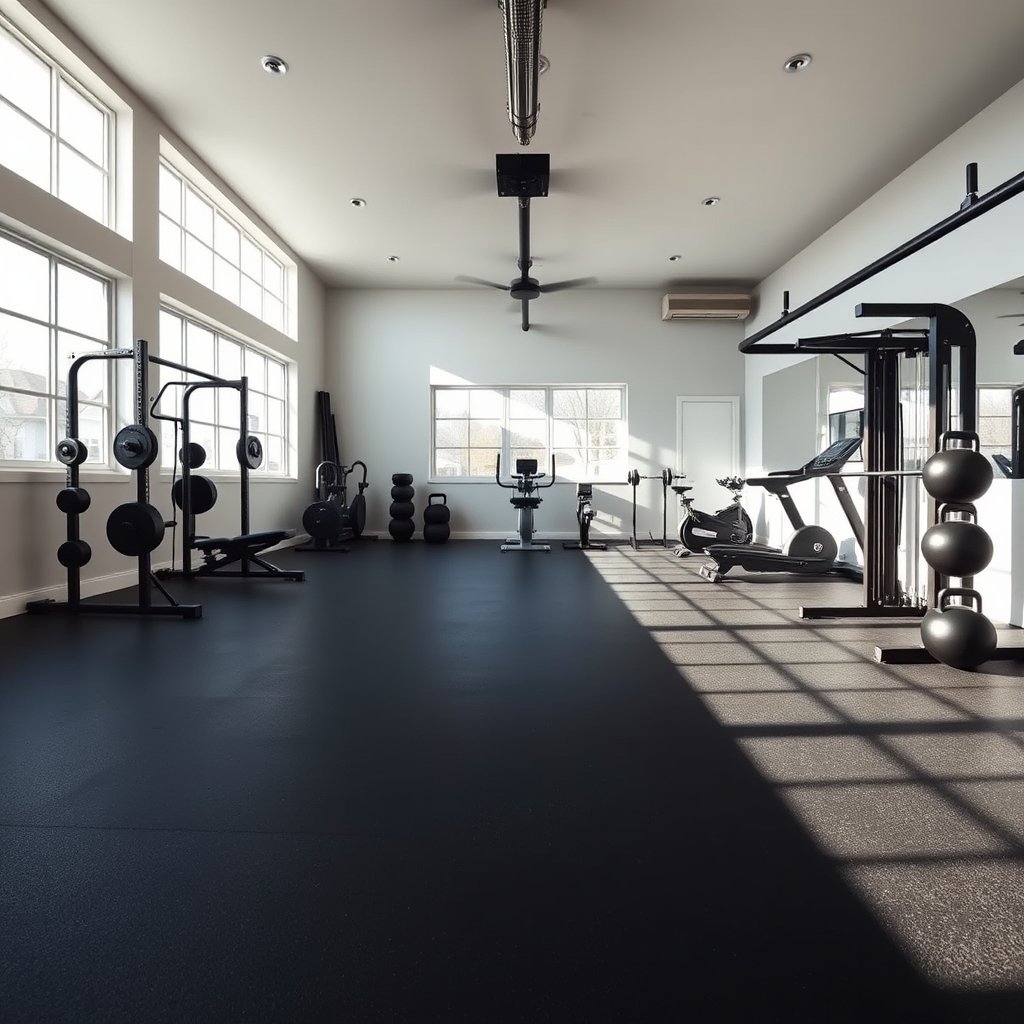
The home gym revolution hasn’t slowed: in 2024, the global rubber fitness flooring market reached roughly $2.8 billion and is expanding at a 6–7% annual rate—driven by a surge in home gyms that pushed overall home gym equipment sales past $6 billion. Rubber has become the clear favorite for home fitness flooring because it delivers a unique blend of impact absorption, slip resistance, noise dampening, and straightforward DIY installation that’s outpacing foam, cork, or PVC in both new builds and upgrades.
Why does this matter? Installing rubber gym mats for home gym environments protects your investment in equipment, your family’s safety, and the resale value of your house. Plus, modern trends like low–odor, recycled, and eco–certified rubber mean buyers can achieve tough commercial–grade performance without the negatives of lingering chemical smell or difficult maintenance.
Step-by-step guide — setting your home gym up for success
Follow these steps to plan, choose, and install home gym rubber flooring that fits your budget and tolerances—and avoid regrets after your first heavy lift or cardio session.
- Plan your area and set a budget
Measure the exact usable square footage. Most homeowners tackle 100, 300, or 400 sq ft zones. Average spend these days: $1,200–$1,500 per installation for pro–quality rubber mats or rolls, running $2–$5 per sq ft for 300–400 sq ft rooms (source). - Identify your main use-cases
Will your floor support heavy squat racks, high–intensity deadlifts, treadmills, or mostly bodyweight/Yoga flows? The right thickness and density depend on your main activity—see “Advanced Analysis” below. - Pick the right flooring type
Interlocking tiles and rolled rubber are the most common. Rolls suit larger areas and seamless installs. Tiles make cutting and future changes easier. For high–impact zones, many will still pay a pro for perfect seams and glue–down; for general zones, DIY works great. - Prioritize low–odor and eco certifications
Today’s best sellers are low–odor, recycled–rubber, and DIY–friendly click–lock systems. Look for GREENGUARD or FloorScore certifications to minimize VOC exposure (expert guide). - Pre–air and acclimatize
Set your mats/tiles in a ventilated area for at least 48–72 hours before installation to cut odors and off–gassing by up to 80%—based on verified user feedback. - Prep your subfloor
Vacuum, repair cracks, and lay a vapor barrier if installing on concrete. Unlevel, dusty, or damp subfloors are behind most complaints about shifting and worse odor. - Install smart
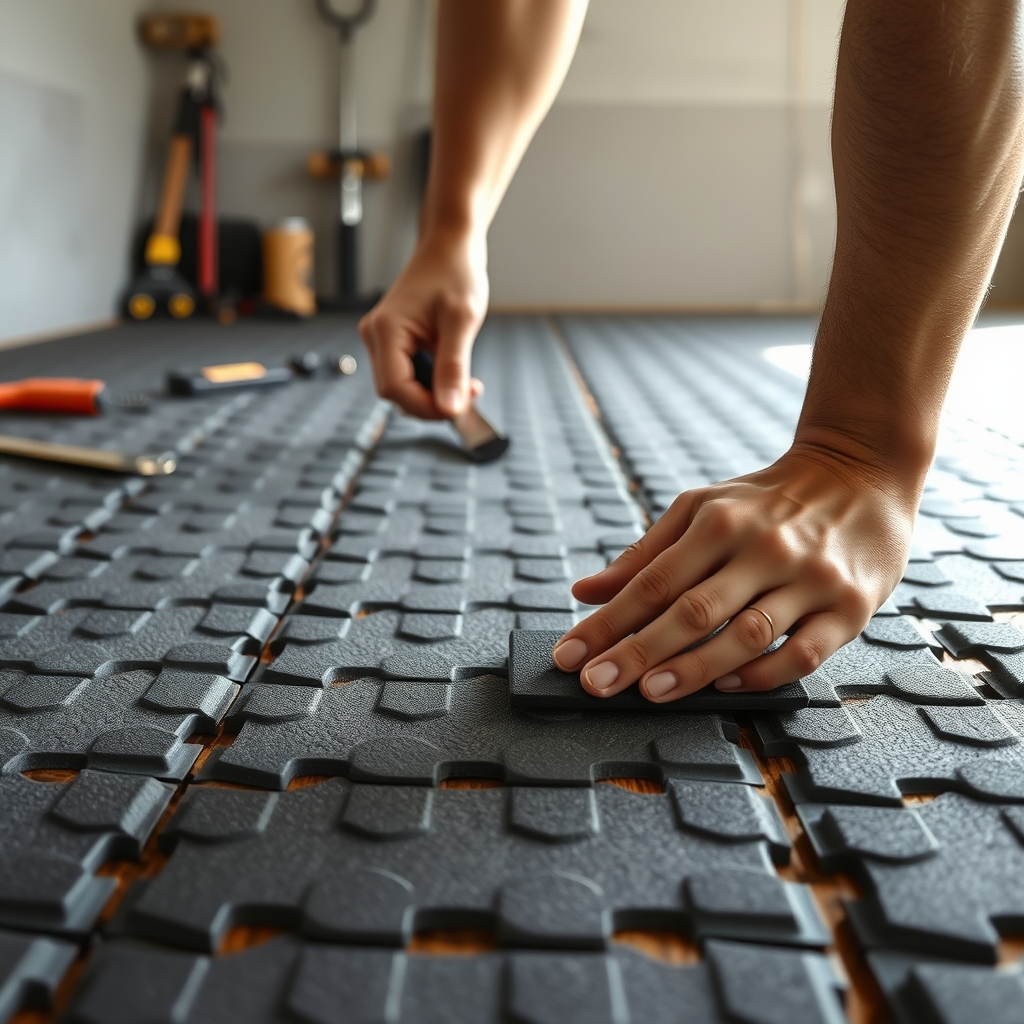
For tiles: start in the center, lay rows staggered like bricks, and work outward. For rolls: work from the wall, trimming ends precisely. Stagger seams, and use double–sided flooring tape (for DIY) or full adhesive for heavy-use areas. - Edge, trim, and treat seams carefully
Use a straightedge and sharp utility knife, and frequently swap blades. Hide cuts under equipment if possible and seal edges to prevent dirt and moisture sneaking underneath. - Initial clean and test
Mop with rubber-safe cleaner after install, then wait at least 24 hours before using heavy equipment.
Advanced analysis & common pitfalls: what most miss
Even premium home gym rubber flooring can disappoint if you skip these details:
- Odor/off–gassing — “Top reported pain points: strong chemical odors/off‑gassing on first use” (Research Findings). Choose low–VOC, recycled, or virgin–rubber mats, and always pre–air at least 48–72 hours. Sustainable buyers should ask for certifications and VOC test data.
- Tile shifting and seam issues — “Tiles that shift or separate; seams that become uneven.” Stagger seams, use high–tack tape (not just friction fit), or go glue–down in major impact zones.
- Wrong thickness/density for your use — Lifting heavy? Use 3/8–1/2 inch thick, 80+ lb/ft³ density rubber. Cardio only? 1/4 inch and lower density may suffice, but can wear out quickly.
- Cutting/fitting problems — “Difficulty cutting/fitting around corners.” Use a heated knife or freeze mats as detailed in the hack above.
- Surface feel mismatch — Too soft mats compress under racks; too hard causes discomfort (especially for floor work). For multi-use gyms, section floors: thickest mats under weights, medium elsewhere.
- Missing or unverifiable certifications — Don’t take “eco” claims at face value; request GREENGUARD, FloorScore, or third-party VOC reports. This remains a content gap competitors ignore—test by airing, sniff test on arrival, or with a home VOC monitor.
- Improper cleaning — Overusing harsh cleaners can damage surface and void warranties. Opt for a pH–neutral, rubber-safe cleaner only.
| Type | Best For | Typical Specs | DIY-Friendly? | Potential Pitfalls |
|---|---|---|---|---|
| Interlocking Tiles | Mixed-use, easy updates | 3/8–1/2″ thick, 40–90 lb/ft³ | Yes | Separating, seam lift |
| Rolled Rubber | Large, seamless installs | 1/4–1/2″ thick, 60+ lb/ft³ | With help | Heavy, hard to cut, curl at ends |
| Bonded/Crumb Rubber | Maximum shock absorb, high impact | 3/4″–1” thick, 30–50 lb/ft³ | No (pro install) | Very heavy, expensive, cannot DIY fix |
Want to dig deeper into resilience and faster recovery after tough training on your new floor? Check out these related guides:
L-Carnitine supplement for muscle recovery and
the proven benefits of sauna blankets.
Conclusion: smarter choices for home gym rubber flooring in 2024
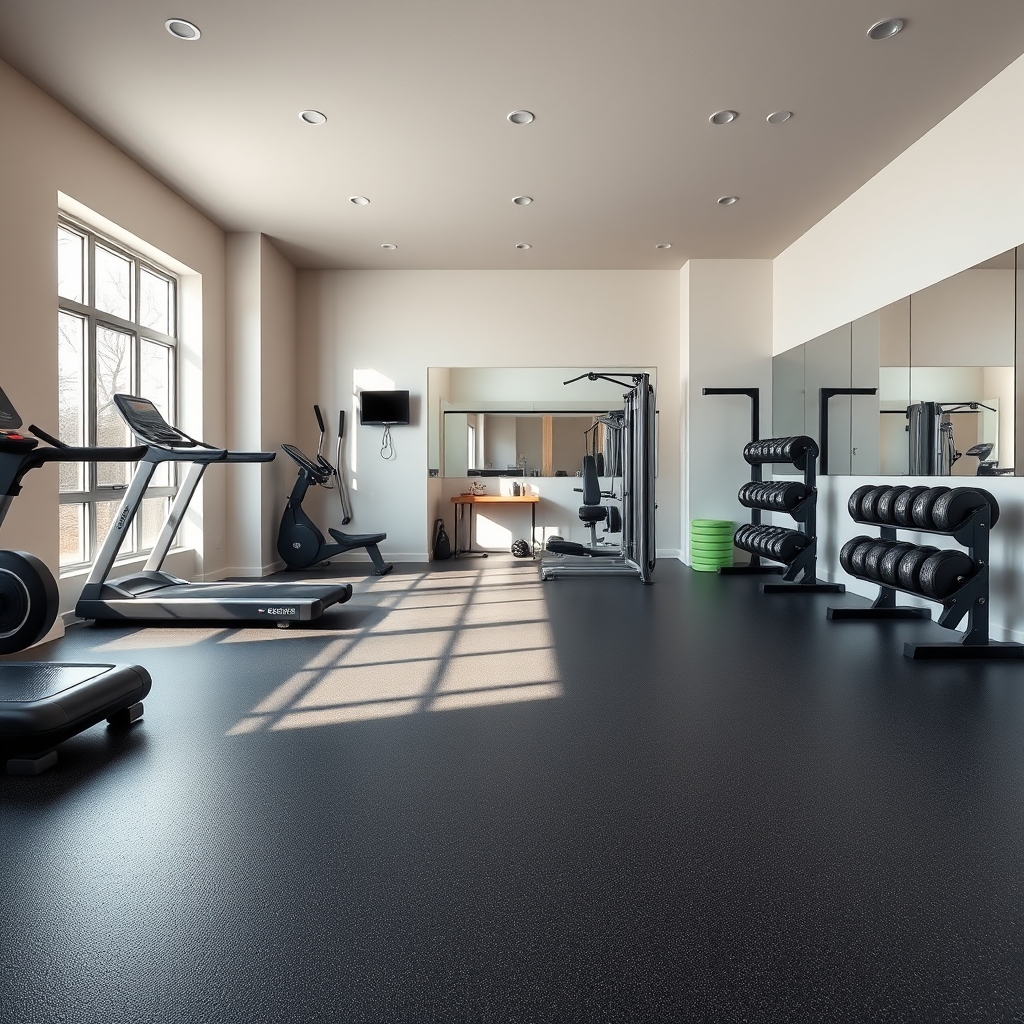
Making a smart home gym rubber flooring investment means matching real–world use, controlling for odor and VOCs, and budgeting for the long term. Go for recycled, low–odor, certified flooring and always pre–air and prep your subfloor. Installation quality and targeting thickness for your main equipment matters as much as the product label—so take your time, and don’t hesitate to consult a pro for edge cases or heavy-lifting zones. You’ll thank yourself every time you drop a dumbbell or log another hour of cardio on a resilient, fresh–smelling, and easy–to–clean floor.
Ready to build a low–maintenance, high–performance home gym? Home gym rubber flooring is your foundation. Shop smart, test before install, and enjoy lasting results—starting today.
FAQ — buyer blockers solved fast
How do I minimize chemical odor when installing rubber gym mats for home gym use?
Air mats/tiles in a well–ventilated space for 48–72 hours before install. Choose low–VOC and GREENGUARD or FloorScore–certified brands for safest results. Mopping with a mild cleaner after install speeds up odor reduction.
What thickness of home gym rubber flooring do I need for heavy lifting?
For squat racks or deadlift zones, use 3/8–1/2 inch thick, 80+ lb/ft³ density rubber. Thinner mats compress and shorten lifespan under heavy weights.
Is DIY installation possible for all rubber flooring types?
Most homeowners can install interlocking tiles and some rolled rubber. Bonded/crumb rubber and major glue–down applications require a pro, especially for large spaces or perfect seam joins.
How does the total cost of ownership compare to foam or PVC flooring?
Rubber flooring costs more upfront ($2–$5 per sq ft) but lasts longer, is easier to clean, and protects better against impact and equipment scuffs. Foam costs less but wears out much faster. PVC may trap odors and is generally less forgiving under weight.
Are recycled or eco–friendly rubber gym flooring options just as durable?
Yes, if you choose reputable, certified products. Many top brands offer recycled options that match or outperform virgin rubber in durability—it’s crucial to verify supplier certifications.